





How Satellite Technology Can Transform Education in Remote Areas
Leveraging Satellite Connectivity, Address Educational Digital Inequality
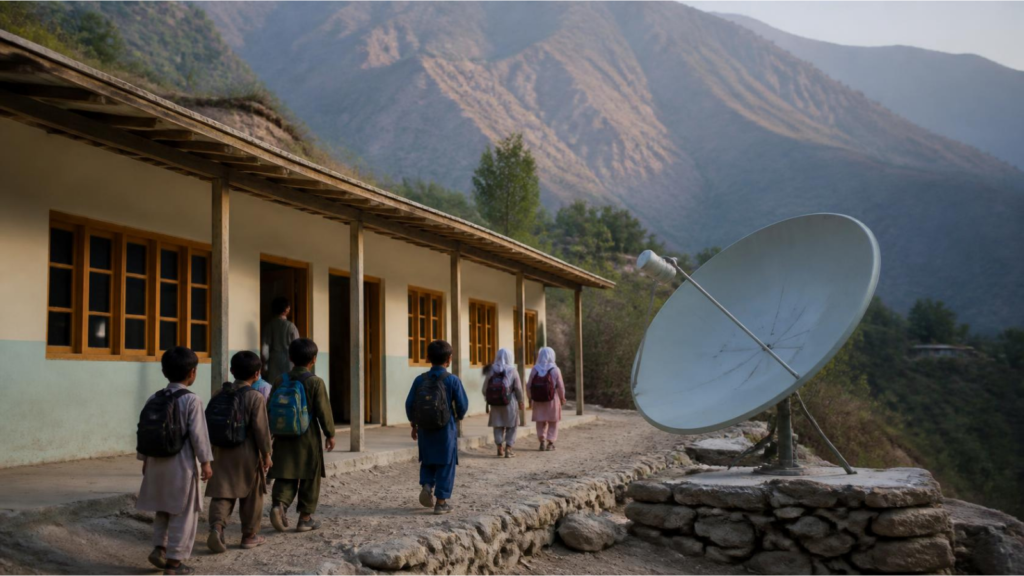
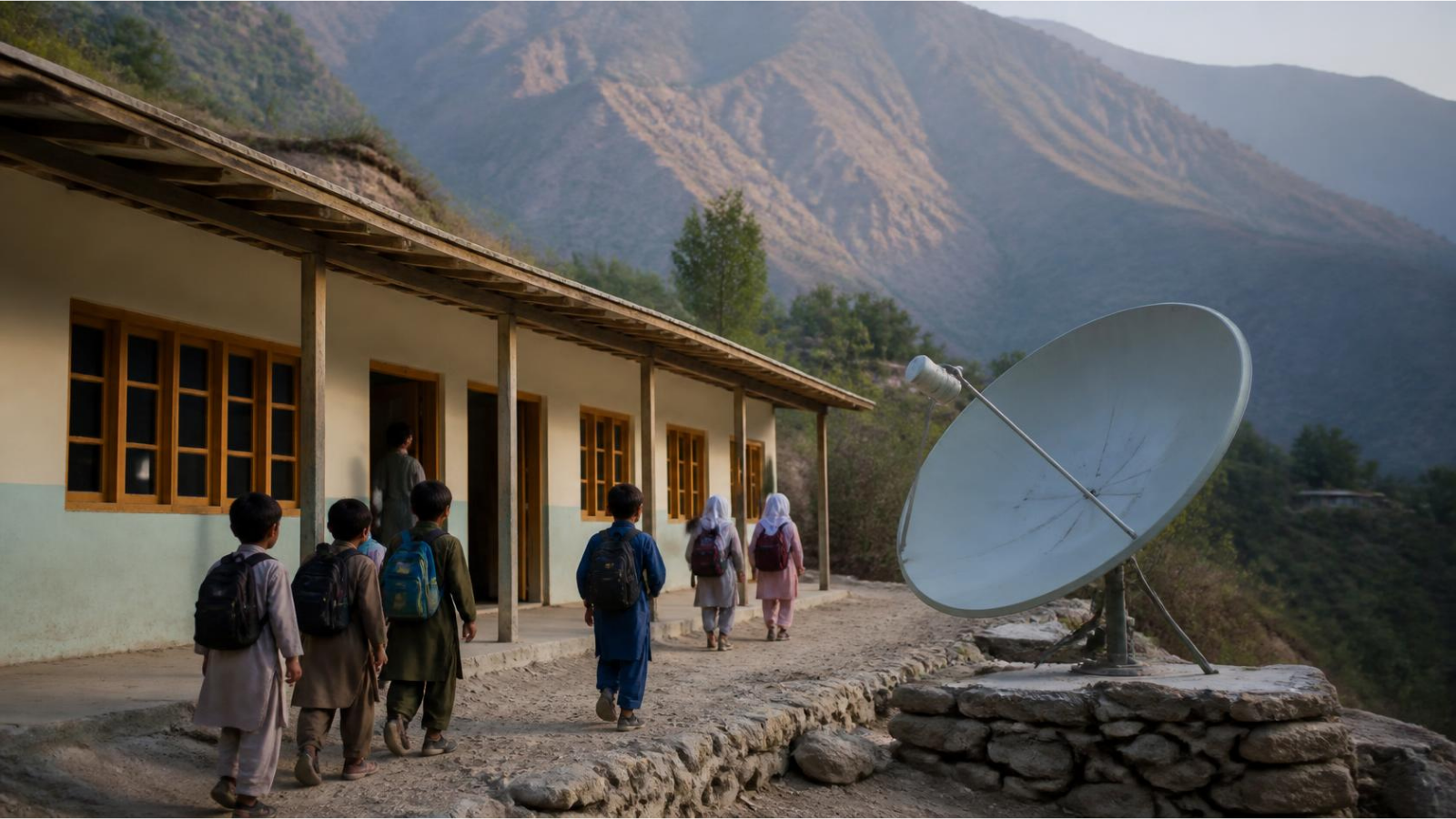
Since education is becoming increasingly dependent on digital connectivity, numerous remote communities have yet to gain access to reliable internet facilities. Satellite rooted communication systems could support efforts to alleviate this gap, especially in those terrestrial regions wherein it continues to be logistically challenging to install fibre-optic cables or mobile networks.
Rural and urban education disparities
The situation is serious in Pakistan. UNICEF findings highlight that 25.1 million children between the ages of 5 and 16 remain outside formal education system, which is around 35% of all children in that age group. The organisation also points out large differences between rural and urban areas, with children in rural areas experiencing more exclusion.
Satellite Connectivity: Complementary Educational Solution
Although satellite connectivity can contribute significantly to improving educational access, it cannot independently resolve Pakistan’s broader educational challenges, though it could offer significant technological connection to schools in remote areas. The International Telecommunication Union (ITU) does in fact regard satellite internet as one possible solution in settings where conventional connectivity is either scarce or unreliable. In its 2025 recommendation on remote classrooms, the ITU considers satellite internet together with mobile hotspots and community networks as possible means of connectivity.
Enhancing Remote academic development Through Digital Connectivity
A school that is connected via satellite could give students access to a range of online educational materials, digital libraries, virtual lessons and other internet-based learning resources. Teachers too could make use of online training and educational resources. The International Telecommunication Union (ITU) has developed comprehensive guidelines for implementing e-learning in remote classrooms, emphasizing the critical role of reliable digital connectivity in expanding access to quality education and stresses the importance of connectivity, computers and digital educational resources.
Strengthening educational resilience in crisis
This approach could be particularly valuable within periods of disruption, where conventional educational infrastructure and communication systems may be blocked. Floods and multiple natural and humanitarian hazards are capable of damaging schools and the communication infrastructure. For instance, in Sindh UNICEF stated in 2024 that the floods had affected 230,000 students and had damaged over 1,300 schools.
Expanding broadband access inside Pakistani territory
Pakistan is already undertaking significant investments toward wider digital connectivity; in June 2026 the World Bank approved $70 million for the Connected Punjab Program, designed to extend broadband access and to bring about 2.1 million more people online by June 2031.
Satellite technology as complementary infrastructural infrastructure
Satellite technology should be regarded as a complementary educational resource rather than a substitute for teachers, whose expertise, guidance, and interaction remain essential to effective learning. It should be treated as a kind of complementary infrastructure which can assist in providing digital education to communities that conventional networks have difficulty reaching.




More Stories
EU Education Support in Pakistan: What It Funds and Delivers
World Teachers’ Day 2026: What Pakistan’s Teachers Need Beyond a Thank You
Punjab University Launches Online Affiliation Portal for Colleges