



Shaping the Classroom: Teacher Training Internationally and in Pakistan
Education systems around the globe are coming to a crucial realization: the effectiveness of an education system is directly tied to the quality of its teachers. As the focus of learning shifts from mere rote memorization to engaging, student-centered inquiry, the approach to professional teacher training is experiencing a noteworthy transformation.
The International Benchmark
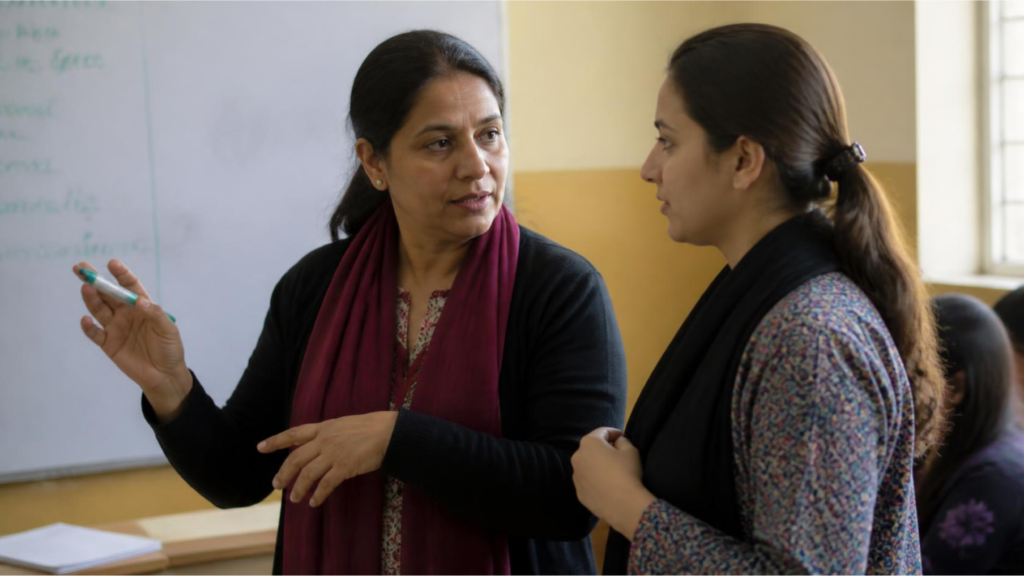
On the international stage, teacher preparation is viewed as a continuous and highly regulated professional journey. Leading educational systems like those in Finland, Singapore, and the UK approach pedagogical training with the same seriousness as medical or legal education. Typically, pre-service training involves specialized postgraduate degrees (such as the PGCE or Master of Teaching) that are complemented by essential clinical practice hours under the guidance of experienced educators. Additionally, Continuous Professional Development (CPD) is seamlessly integrated into career advancement, highlighting the importance of digital literacy, social-emotional learning, and adaptive teaching methods.
The Landscape in Pakistan
In Pakistan, the landscape of teacher training is evolving. Traditionally dependent on short certification diplomas, the public sector, guided by the Higher Education Commission (HEC), has revamped pre-service qualifications to require standardized four-year B.Ed. (Honors) degrees. Provincial academies like Punjab’s Quaid-e-Azam Academy for Educational Development (QAED) and various federal initiatives regularly conduct in-service training that emphasizes foundational literacy, digital tools, and student learning outcomes (SLOs).
At the same time, Pakistan’s private education sector presents a mixed picture. Prestigious international schools are increasingly valuing formal qualifications such as Cambridge Professional Development Qualifications (PDQs) or international postgraduate diplomas. In contrast, lower to mid-cost private institutions often depend on internal workshops and on-the-job mentorship to help subject specialists who may lack formal training.
Bridging the Gap
International systems often focus on long-term accountability and research-driven practices, and Pakistan is making strides to align its national priorities with these global standards. Key steps include broadening access to hybrid micro-credentials, establishing peer mentorship programs, and promoting fair resource distribution. By investing in thorough teacher development, we can transform classrooms both here and around the world—into lively centers of critical thinking, innovation, and lifelong learning.


More Stories
EU Education Support in Pakistan: What It Funds and Delivers
Pakistan Tops Erasmus Mundus 5 Years Running: What It Means
World Teachers’ Day 2026: What Pakistan’s Teachers Need Beyond a Thank You