



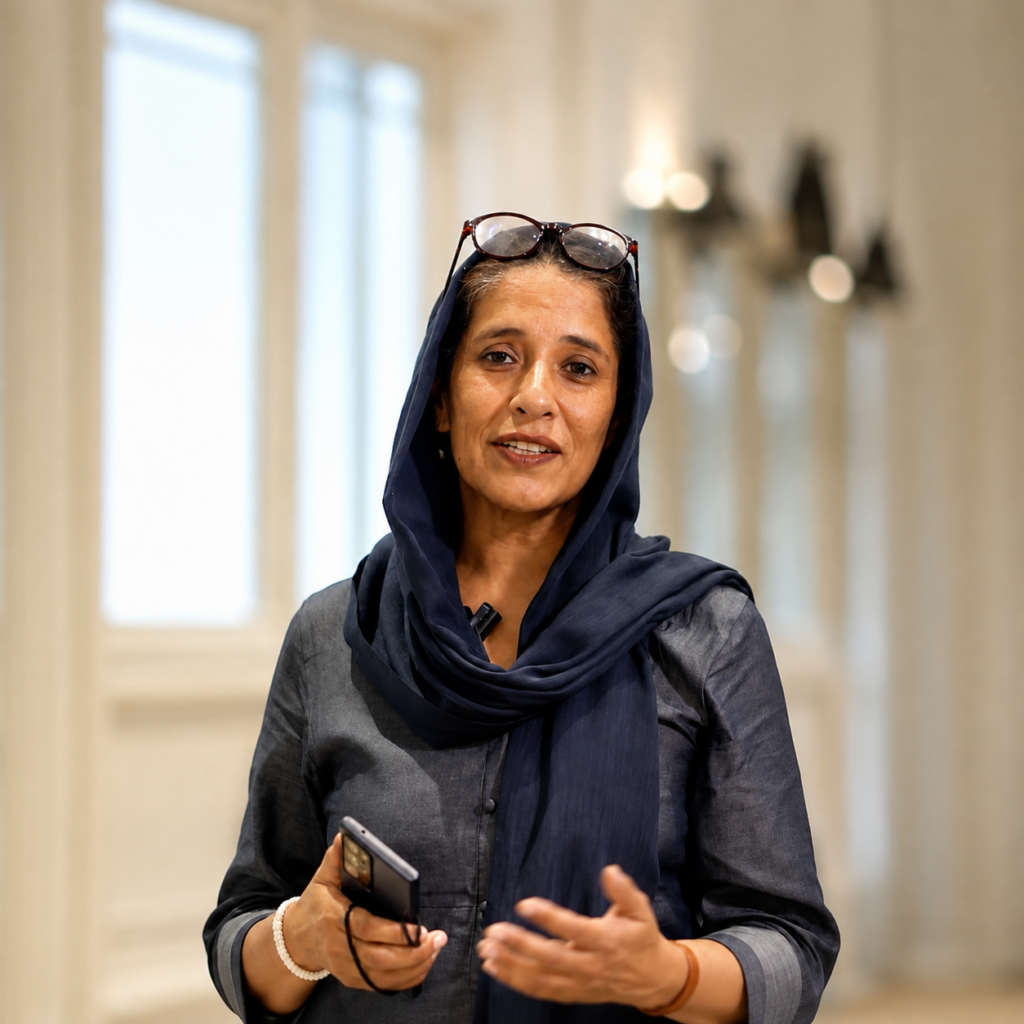
We had the pleasure of sitting with Ms. Fozia Arshad, who is a senior leader at Scarsdale International School, and the topic we spoke about was The Access Gap: Urban vs Rural Counselling.
Is career counselling in Pakistan effectively a privilege only urban, private-school students get?
In many respects, yes – although I would argue that the deeper issue is not simply access to a careers counsellor. It is access to an entire ecosystem of exposure, information, guidance, networks, opportunity and support.
My own experience has given me a very personal perspective on this.
I was born and brought up in the UK, educated there in the public school system and subsequently taught there for 13 years. Even 30–40 years ago, the education system I experienced recognised that schools had a responsibility to help students understand the world of work. Career guidance was not something reserved for students whose parents could afford it privately. Schools had careers advisers or careers officers, supported by the local education authority. Also, from primary school, students were exposed to different careers as part of the regular school year. For example, a police officer might come into school and talk about policing. A firefighter might talk about the fire service, a nurse may talk about working with patients. As we got older, and reached grade 9 we received more formal counselling sessions as part of the curriculum. In those days it was called “PFL” or “Preparation for Life”, a precursor to the more modern PSHE (Personal, Social, Health and Economic education). These non examinable sessions aside from covering topics such as Health, relationship and life skills and independence,also taught careers education and provided students with guidance on finding a job, writing a CV, and applying for higher education. We got to meet more professions, for example, a lawyer, doctor, pilot, engineer, a member of the armed forces such as the army or navy. We also sometimes physically visited workplaces — fire stations, hospitals, printing presses and other businesses. to see how that industry actually worked. Ofcourse we didn’t realise this at the time, but the regular exposure provided us with a bank of knowledge we could build on later on. We were able to see what different jobs looked like, meet the people who actually did them and decide whether something interested or inspired us. Questions about qualifications, prerequisites and academic pathways came much later.
From grade 9 and 10 onwards, schools organised an annual careers fairs. Local employers, vocational organisations and professionals came into schools, often with stalls and information that students could explore. This was particularly important because not every child was expected to go to university. Students leaving school at 16 with O-levels or equivalent qualifications might enter employment, apprenticeships or vocational training. Careers education therefore needed to address the full spectrum of possible futures.
I later spent 18 years working in a privileged private school in Lahore as a university adviser and careers counsellor. There, students had access to a completely different ecosystem: university fairs, professional networks, parents with knowledge and connections, international university information, scholarships, career assessments and people whose job it was to help them navigate the system.
The year I spent working with an education NGO in Lahore, serving students from extremely disadvantaged families provided a stark contrast. The NGO included a school from Playgroup to Grade 10. When asked what they would like to do after matriculation, the 15/16 year old students I encountered there, the conversation was often not about university. It was: “How soon can I start earning?”Their underprivileged backgrounds meant that many students were expected to go to work after finishing school so that they could help to support the family. Staying in education for another two years, followed by another four years of university, simply wasn’t economically realistic. Without further education or skills, their work options were limited: boys could work as unskilled labour in a factory or construction site or work in a shop.
This taught me that the in equality is not simply access to career counselling. It is access to the conditions that allow a child to turn aspiration into reality. The privileged student often has time, information, networks, parental support, financial resources and permission to explore. The disadvantaged student may have none of these.
What does a student in a small town or disadvantaged community lack that a student in Karachi or Lahore may take for granted?
Obviously financial challenges is the most obvious thing. But aside from this, these youngsters lack is exposure and thereby opportunity. A child cannot aspire to a career they have never encountered. A student in a well-resourced private school may meet people from a plethora of professions: doctors, engineers, architects, artists, entrepreneurs, designers, software developers and university representatives. They may attend careers fairs and university fairs. Their parents may know someone who works in a particular profession.
A student in a small town, rural community or poor urban neighbourhood usually has a much narrower frame of reference. Their understanding of a “career” may come almost entirely from the people immediately around them and often does not extend beyond unskilled labour jobs. However, for some of the boys I worked with at the NGO, the army and police were particularly attractive career choices. This wasn’t simply about prestige. These careers represented something tangible: a stable income, job security, structured training, career progression, opportunities to continue education, and most notably, social respectability. For a young person whose alternatives appeared to be a shop, factory or construction site, these were compelling opportunities. This does not mean that these young people lacked ambition. They were making rational decisions based on the opportunities they could see.
The situation for girls could be even more complex and the exposure even more limited. Many girls attending the NGO school were there because their parents had “allowed” them to attend; sending a daughter to school was acceptable because the education was free and because there was a clear limit to what they expected that education to lead to. Matriculation was often considered an appropriate endpoint. Beyond that, the expectation was frequently that the girl would remain at home, learn household and domestic responsibilities and eventually marry. In a conservative and patriarchal environment, particularly among poorer families, girls going out to work may not be considered socially acceptable. So even when a girl was academically capable of continuing and dare I say, even aspirational in wanting a career, the question wasn’t simply: “What does she want to study?” We were also faced with the dilemma of whether her family would even allow her to continue. And the families’ questions to us were intense: Where will she study? Who will take her there? Who will pay for the transport and college fees? Will she be safe? Will she become morally corrupted whilst she is there?
For underprivileged and conservative families in Pakistan, sending a daughter on to further education can involve a significant investment of time, energy and money. Limited public transport, combined with concerns about safety and girls travelling independently, often means that fathers, brothers or other male relatives must take them to college or university and bring them home. This can involve hours of travel each day, transport costs and the loss of valuable working time. For families already struggling financially, the real cost is therefore not just tuition, but enabling a daughter to access education.
There is also an uncomfortable, often unspoken consideration: once a daughter marries and moves to her husband’s home, parents may feel that the investment they have made in her education will ultimately benefit another household. With several younger children also needing support, some families may conclude that they simply cannot afford to make this investment without a clear and immediate benefit to their own family.
For the small number of girls we were able to support into Intermediate level education, we therefore had to find scholarships and, wherever possible, educational opportunities that families could accept. Teaching and nursing were among the professional pathways that more open-minded parents were more likely to consider acceptable. Vocational training was another option — sewing, cooking, baking, beauty services and other practical skills that were a step up on the social ladder rather than going into domestic service in an affluent person’s home.
The NGO’s vocational training centre on the same campus made a significant difference. Parents already trusted the environment, allowing their daughters to continue learning without the concerns and costs of travelling elsewhere. For many, trust, safety and transport were just as important as tuition fees and educational opportunity. It also highlighted that simply offering girls a limited range of socially acceptable careers—such as teaching, nursing or vocational work—is not genuine career guidance. The challenge is to make a wider range of careers genuinely accessible. This requires not only education and scholarships, but safe transport and campuses, family engagement, flexible employment opportunities and clear pathways into meaningful work.
Can online counselling actually close this gap, or does it just look like it does?
Online counselling can close part of the gap. Its greatest advantage is geography. A student in a small town can potentially access the same counsellor, career assessment, university information, scholarship database or career resources as a student in Lahore or Karachi. That is enormously valuable.
But online counselling cannot, on its own, overcome poverty, family expectations, gender restrictions, transport, safety or the opportunity cost of education.
Counsellors also need to understand the context in which they are working. They need to understand the socioeconomic realities of rural and underprivileged communities and research the opportunities that are genuinely available to their students. The pathways open to these students will often be very different from those available to more privileged urban students. My own experience made this clear. After 18 years as a university adviser and careers counsellor in a privileged Lahore school, I had to unlearn some of what I knew when I began working with an NGO serving disadvantaged families. I had to undergo a genuine paradigm shift. I learned that counsellors need to understand family finances, the need to earn, transport, safety, scholarships, vocational opportunities, local employers and regional economies. These are not lesser forms of career guidance; they are different forms of guidance responding to different realities.
This is why I see online counselling as a force multiplier, not the solution itself. Technology can extend specialist expertise into underserved communities, but students still need appropriate human support to turn information into realistic and achievable pathways.
What’s the simplest fix that’s being ignored?
I don’t think there is a simple fix, nor do I know if it is possible for every student in Pakistan to receive career advice. However, we have to start somewhere, and even small, targeted interventions in rural or underprivileged urban communities could make a real difference. Rather than placing a highly qualified counsellor in every school, experienced city-based counsellors could volunteer their time to train teachers in less affluent communities. These teachers could then support students locally, with specialist counsellors providing additional guidance when needed.
A possible model: one local digital platform + a network of experienced counsellors providing training and mentorshipto provide training to a group of career-guidance teacher from rural/underprivileged communities.
It is important to note that the experienced counsellor volunteers will need cultural and socioeconomic competence. Counsellor training needs to go beyond psychometric testing and university admissions. Counsellors must understand poverty, family finances, gender and family expectations, rural economies, transport and safety, scholarships, vocational pathways, local employers and labour-market realities. The pathways available to disadvantaged students may be very different from those available to affluent urban students.
Their role is not simply to tell a student what they should become, but to help them understand what is possible within their circumstances — and then help expand those possibilities. Existing counsellors also need continuing professional development to build a stronger understanding of Pakistan’s socioeconomic diversity and the different realities faced by students across the country.
A more long-term solution: Ideally, career education should be part of every child’s schooling from an early age – essentially it should be woven into the national curriculum. However, if this is not yet possible at a national or provincial level, every school should have at least one appropriately trained person responsible for career guidance. The process should be developmental and systematic where regular exposure creates layers of experience and a bank of knowledge that will help students make informed decisions.
Primary school (Grades 2–5): Introduce children to the world of work through regular visits and talks from people in different professions.
Middle school (Grades 6–8): Help students explore their interests, strengths and abilities, and begin understanding different careers and their requirements.
Secondary school (Grades 9–10): Provide more structured career guidance through advisers, workplace visits, careers fairs, employers, vocational and apprenticeship pathways, and university information.
Upper Secondary (Grades 11–12): Provide individualised guidance on university, scholarships, vocational education, employment, entrepreneurship and financial planning.
Importantly, not every student should be funnelled towards university. University, vocational education, apprenticeships, technical careers and direct employment should all be presented as legitimate and informed choices.
Employers also have to become part of the solution: Schools cannot simply expose students to careers and then expect students to navigate a competitive job market alone. Local employers should become part of the education and careers ecosystem, through CSR and community outreach, providing career talks, workplace visits, internships, apprenticeships, mentoring, skills training and clear pathways into employment. Pakistan already has examples of this, including vocational training providers and companies such as Descon, but these initiatives remain too few and fragmented. They need to be connected and scaled.
Vocational education is not second-best. Strong technical and vocational pathways can lead to skilled, well-paid employment locally and internationally, transforming training from simply a qualification into a genuine pathway to economic independence.
Whose job is it to fix this: schools. Government, or private platforms like Taleem Wire?
Ultimately, I believe this has to be a shared responsibility. The Government needs to provide the framework and make career education part of the education system, so that access does not depend on whether a child attends an affluent private school. Schools need to deliver it and ensure that students receive regular exposure and guidance. This would help create greater parity across the country, ensuring entitlement to all, as well as providing a top-down approach, where schools and individuals work within a common framework rather than in isolation.
A platform such as Taleem Wire could play an important role in extending this expertise beyond the major cities. It could provide schools and teachers in rural and underserved communities with access to career information, trained counsellors, career assessments, scholarship information and guidance on vocational and employment pathways — resources that may otherwise be completely unavailable to them. It could also create a network linking local teachers with experienced counsellors who can provide training, mentoring and specialist advice remotely. In this way, technology becomes a bridge between expertise that already exists in Pakistan’s major cities and students who would otherwise have little or no access to it The platform can extend to employers who also need to become part of the ecosystem, providing workplace exposure, skills training, internships, apprenticeships and, ultimately, pathways into employment.
Thus, the platform does not replace the local school or teacher; it strengthens their ability to provide meaningful career guidance.
I don’t think we should wait for the Government to create a perfect national system before acting. The Government should provide the framework, but digital platforms, schools, counsellors, private organisations and employers can collaborate to begin building the infrastructure now.


More Stories
Chasing Grades vs. Chasing the Right Fit: Rethinking University Placement in Pakistan
Parental Pressure in Career Choices: A Counsellor’s Perspective on Passion vs. Prestige